Protecting Our Streams, Lakes, and Rivers Starts at the Edge
“What falls on the ground ends up in the Sound” is a common saying to illustrate how what we do upstream can impact downstream waters. Every action in a watershed—from forests and fields to roads and neighborhoods—affects the health of downstream waters. Our ponds, lakes, and drinking waters can all be harmed by what we do in our backyards and how we manage our land.
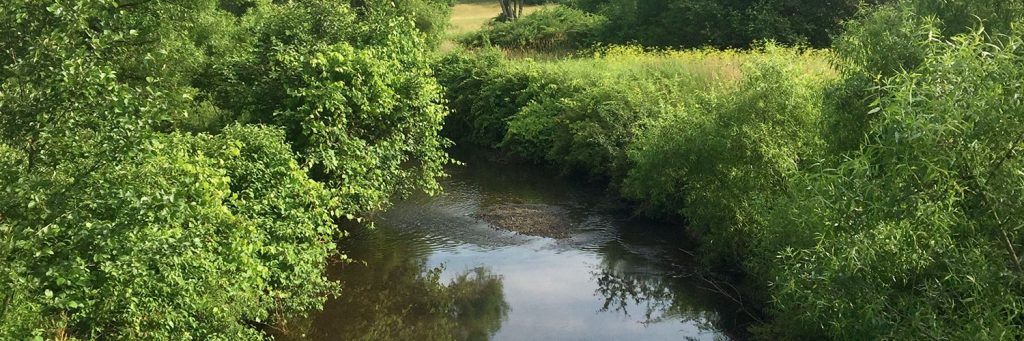
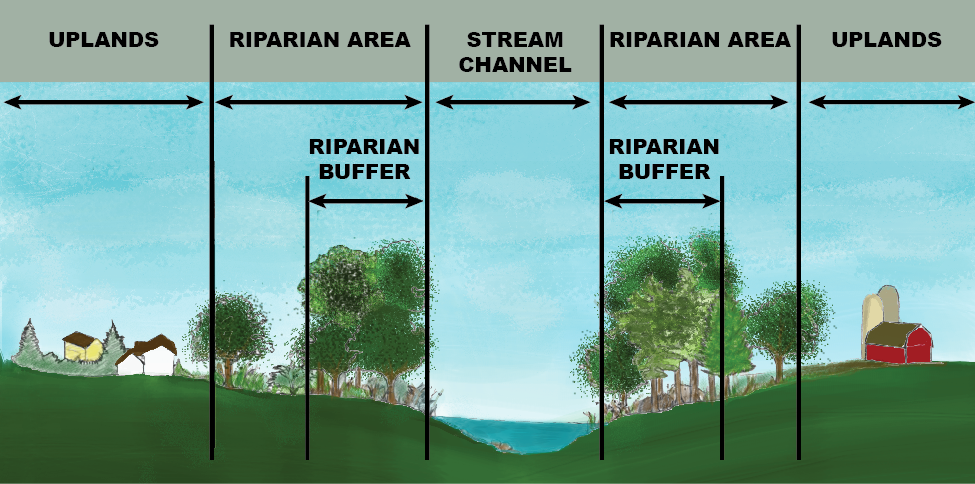
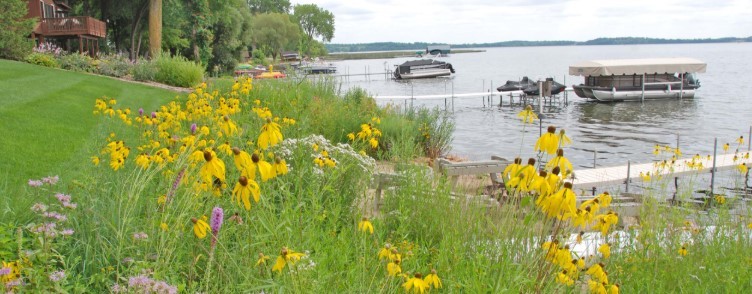
Healthy waterways begin at their edges, where trees, shrubs and plants – aka vegetated aka riparian buffers – act as a superhero to protect our waters and our communities. Connecticut must take action to protect the vegetation along our waterways that acts as to “buffer” harmful activities from land and stormwater runoff.
Why Vegetated/“Wild” Edges Matter
Stormwater Runoff: From Land to Waterways
Excess rainwater can cause erosion, flooding, and damage to roads, bridges, and stormwater systems. It also carries sediments, fertilizers, pesticides, and other pollutants into our waterways, affecting both human communities and wildlife.
Nature’s Cost-Effective Solution
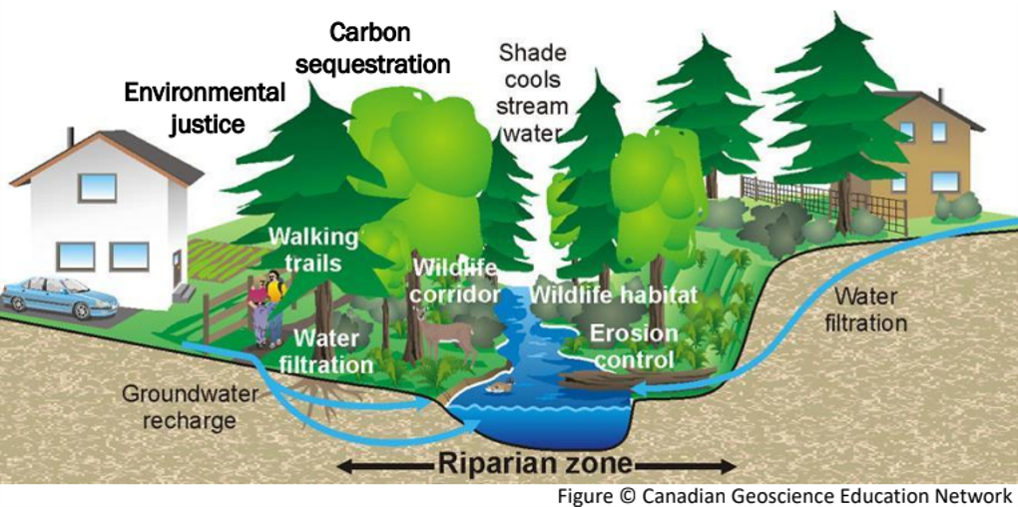
Vegetated strips along streams, rivers, and lakes are one of the most effective ways to manage stormwater runoff. By slowing the flow of water, trapping sediment, and filtering pollutants like fertilizers and pesticides, these natural buffers protect both water quality and surrounding communities from erosion and flooding.
In addition to protecting the environment, property, and infrastructure, vegetated buffers are remarkably cost-effective. Unlike engineered solutions such as retention basins, letting nature do its work is free. Investing in the protection and restoration of these “wild edges” saves money, reduces maintenance costs, and provides habitat for fish, birds, and pollinators (yay biodiversity!)—all at the same time.
What makes a vegetated buffer effective?
Vegetated buffer (those wild edges!) along our waterways use nature’s own tools to keep our water clean and safe. Effective buffers include:
- Native & Native-like Trees: Roots stabilize soil, prevent erosion, and provide shade to keep water cool for fish and other wildlife.
- Native & Native-like Shrubs: Slow rainwater, trap sediment, and provide food and shelter for birds and small animals.
- Native & Native-like Grasses & Wildflowers: Deep roots absorb excess water, filter pollutants, and attract pollinators like bees and butterflies.
- Layered Planting: Trees, shrubs, and grasses together create multiple layers that filter water, slow runoff, and provide diverse wildlife habitat.
- Natural Debris: Fallen logs and leaves shelter fish and insects, slow water flow, and reduce erosion.
- Meandering Pathways (Optional): Curved paths in the land or waterways slow water, reducing flooding and allowing sediment to settle.
Lawns: The Green Nemesis of Healthy Waterways
While lawns look tidy, they fall short as waterway protectors. Their shallow roots don’t hold soil, they underperform as a filter of pollutants, allow fast runoff, and provide limited wildlife habitat. Simply put, lawns are the enemy of clean water.
Connecticut: The Outlier in New England
Connecticut is the only state in New England that does not explicitly protect vegetation along its waterways. Unlike neighboring states, there are no statewide rules ensuring that streams, rivers, and lakes have a buffer of natural vegetation to filter pollutants, reduce erosion, and provide critical wildlife habitat.
This gap means that the health of our rivers, streams, and lakes relies almost entirely on voluntary action—and that upstream choices can have serious downstream consequences. Protecting and restoring vegetated buffers in Connecticut is one of the most effective, cost-efficient ways to prevent pollution and flooding while supporting thriving ecosystems.
What Rivers Alliance is Doing
Policy & Legislation
- Driving for explicit protections for vegetated buffers in state and local regulations. Recent win: Special Act 15-12 which establishes a working group to figure out how to incorporate protections for vegetated buffers into our statutes and regulations.
- Promoting enhancement of training and resources for local officials who safeguard our local streams and wetlands. Recent win: Special Act 25-73 which changes the requirement for IWWC and employees training from one member to all members.
- Working in various state-wide policy groups and councils. Water Planning Council Advisory Group; Long Island Sound Partnership Citizen’s Advisory Council; Governor’s Council on Climate Change; Fisheries Advisory Council; DEEP’s Nature Based Solutions Initiative.
Education & Outreach
- Publishing guides and fact sheets on buffers and water quality.
- Supporting local restoration efforts.
- Raising public awareness: upstream actions matter downstream
What You Can Do
Wild Those Edges!
- Maintain or restore native trees, shrubs, and plants along streams and lakes.
Manage Lawn & Stormwater
- Reduce fertilizers and pesticides.
- Redirect downspouts to gardens and install permeable surfaces.
Get Involved Locally
- Volunteer with watershed groups, lake associations, and/or conservation districts.
- Support local buffer protection initiatives and state legislation.
Spread Awareness
- Share what you learn with neighbors and your community.
Take the River Smart Pledge at RiverSmartCT.org
Resources
- The Importance of Riparian Buffers: Brochure and Storymap
- How to Create a Streamside Buffer Garden
- WestCOG Report: The Case for Riparian Corridor Protections
- River Smart
- Riparian Buffers Working Group Information